Custom Wooden Crates Pricing: What Affects the Cost?
When businesses need to ship large, heavy, or fragile items, custom wooden crates are often the safest and most reliable solution. But one of the most common questions companies ask is simple:
How much do custom wooden crates cost?
The answer depends on several factors. Understanding custom wooden crates pricing can help you budget more accurately, avoid overpaying, and choose the right solution for your specific shipping needs.
In this guide, we break down the key factors that influence custom wooden crates pricing and what you should consider before placing an order.
Why Custom Wooden Crates Are Worth the Investment
Before diving into custom wooden crates pricing, it is important to understand why businesses choose custom crates in the first place.
Unlike standard pallets or generic packaging, custom crates are built specifically for your product. This means:
- Better protection during transit
- Reduced risk of damage
- Compliance with shipping regulations
- Improved stacking and handling
For industries like manufacturing, construction, and machinery transport, the cost of damaged goods far outweighs the investment in proper crating.
- Size and Dimensions of the Crate
One of the biggest factors affecting custom wooden crates pricing is the size of the crate.
Larger crates require:
- More lumber
- More labor
- More fasteners and reinforcements
For example:
- A small crate for equipment parts will cost significantly less than
- A large crate designed to hold heavy machinery or oversized items
Custom sizing also adds complexity. The more precise the dimensions, the more time it takes to design and build the crate.
Key takeaway:
The bigger and more complex the crate, the higher the cost.
- Type and Quality of Wood Materials
Not all wood is the same, and the type of material used plays a major role in custom wooden crates pricing.
Common materials include:
- Softwood (more affordable, commonly used)
- Hardwood (stronger, more expensive)
- Plywood panels (used for enclosed crates)
Higher-quality materials increase durability and protection but also raise costs.
If your shipment is extremely heavy or fragile, investing in stronger materials may be necessary.
Tip:
Choosing the right material for your application can help balance cost and performance.
- Weight Capacity and Structural Design
Another key factor in custom wooden crates pricing is how much weight the crate needs to support.
Heavy-duty crates require:
- Thicker wood
- Reinforced framing
- Additional support beams
For example:
- A crate for lightweight products will cost less
- A crate designed for industrial equipment will require extra engineering
In some cases, crates are built with internal bracing or shock-absorbing features to protect sensitive equipment.
Important:
The heavier the load, the more complex and costly the crate design.
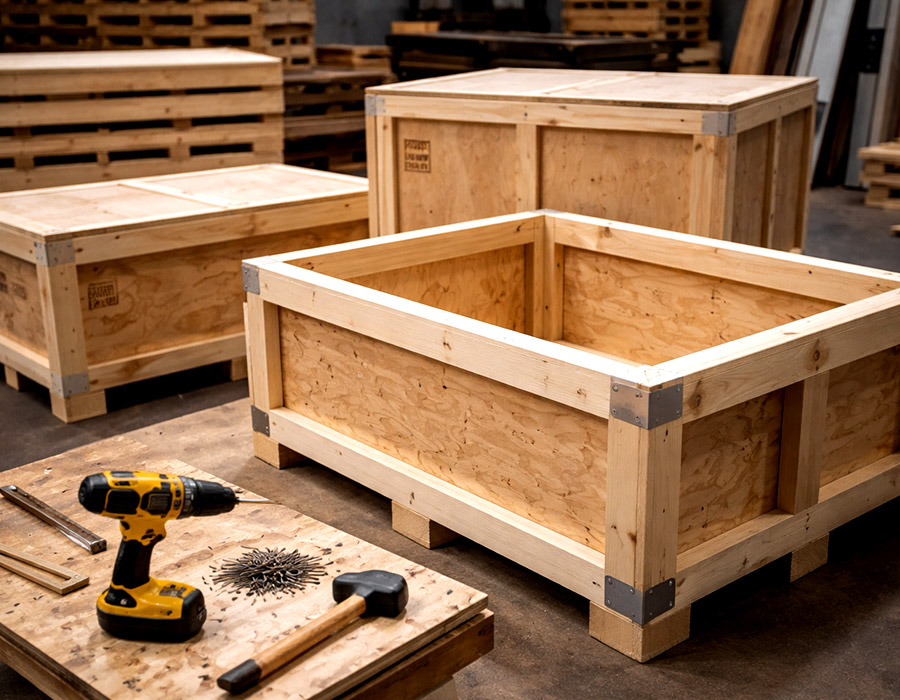
- Open vs. Fully Enclosed Crates
The style of the crate also impacts custom wooden crates pricing.
Open Crates (Less Expensive)
- Provide basic structural support
- Allow visibility of contents
- Use less material
Fully Enclosed Crates (More Expensive)
- Offer maximum protection
- Include solid panels on all sides
- Require more labor and materials
If your items are sensitive to weather, dust, or damage, a fully enclosed crate is often worth the added cost.
- Heat Treatment and ISPM 15 Compliance
If you are shipping internationally, your crates must meet ISPM 15 regulations, which require heat treatment to prevent the spread of pests.
This adds to custom wooden crates pricing because:
- The wood must be treated in certified facilities
- Additional documentation is required
- Compliance markings must be applied
While this increases the upfront cost, it is essential for avoiding delays or rejected shipments.
Bottom line:
If you export goods, heat treatment is not optional—it is required.
- Labor and Customization Complexity
Custom crates are not mass-produced. Each one is built based on your specific requirements.
Labor costs increase with:
- Complex designs
- Tight tolerances
- Unique shapes or dimensions
- Specialized assembly requirements
For example:
- A simple rectangular crate is quick to build
- A crate with custom cutouts, compartments, or internal supports requires more time
This directly impacts custom wooden crates pricing.
- Quantity Ordered
Volume plays a major role in pricing.
Small Orders
- Higher cost per crate
- Less efficiency in production
Bulk Orders
- Lower cost per unit
- More efficient material usage
- Reduced labor per crate
If your business regularly ships products, ordering in bulk can significantly reduce custom wooden crates pricing over time.
- Delivery and Logistics Costs
Many businesses overlook shipping when calculating custom wooden crates pricing.
Costs can include:
- Local delivery fees
- Fuel charges
- Rush delivery premiums
If you need same-day or expedited service, expect to pay more.
Working with a local supplier can help minimize transportation costs and improve turnaround times.
- Additional Features and Custom Add-Ons
Custom crates can include a variety of optional features that impact pricing:
- Foam inserts for fragile items
- Shock absorption systems
- Waterproof lining
- Hinged lids or access panels
- Branding or labeling
Each of these adds functionality but also increases custom wooden crates pricing.
- Timeline and Urgency
Speed matters in pricing.
If you need a crate built quickly, rush orders often come with:
- Overtime labor costs
- Expedited material sourcing
Planning ahead allows you to avoid these extra fees and keep costs lower.
How to Reduce Custom Wooden Crates Pricing
If you want to control costs without sacrificing quality, consider the following:
- Standardize sizes where possible
- Order in bulk
- Plan ahead to avoid rush fees
- Choose materials that match your actual needs
- Work with an experienced supplier
Understanding your requirements upfront can help you avoid unnecessary expenses.
Custom crates are an essential investment for businesses that need to ship valuable or fragile items safely.
While custom wooden crates pricing varies depending on size, materials, labor, and additional features, understanding these factors gives you more control over your budget.
Instead of focusing only on cost, it is important to consider the value:
- Reduced product damage
- Improved shipping efficiency
- Compliance with regulations
- Peace of mind during transit
When done right, custom crating is not just an expense, it is a smart business decision.
Recent Posts
Complete Pallet Services in Canoga Park
How Pallet Recycling Saves Businesses Money Every Year in Southern California